

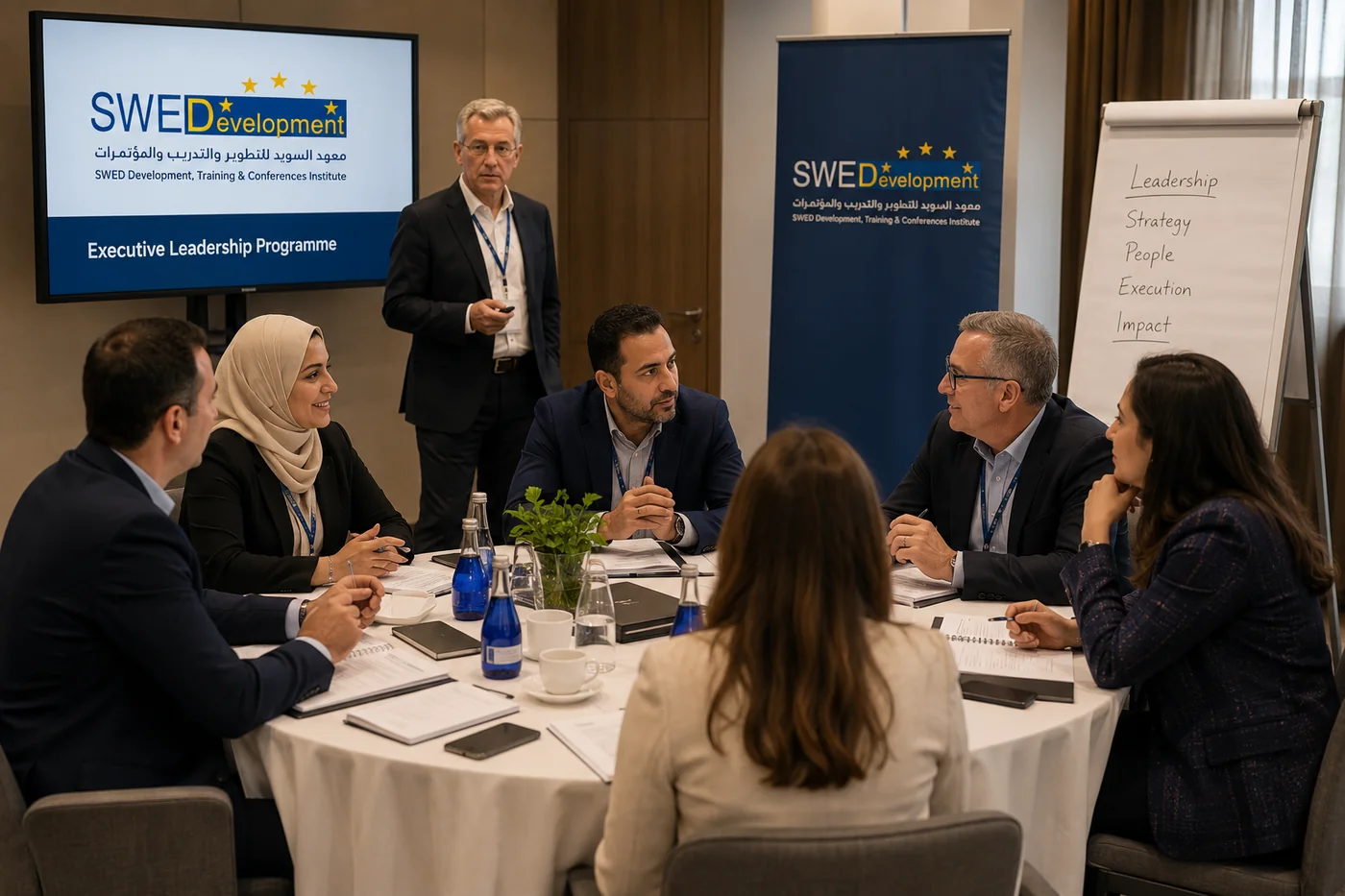
Artificial Intelligence and Institutional Transformation
This programme is designed for executive leaders and decision-makers who need to move artificial intelligence from broad interest to disciplined institutional action. It addresses the strategic, organisational, governance and delivery choices required to identify high-priority opportunities, define accountabilities, connect initiatives to measurable outcomes, and organise a realistic first-phase implementation pathway. The programme is structured around practical executive outputs: a prioritised opportunity map, an initial governance model, a measurement framework and a 90-day action plan.
Artificial Intelligence and Institutional Transformation
This programme is designed for executive leaders and decision-makers who need to move artificial intelligence from broad interest to disciplined institutional action. It addresses the strategic, organisational, governance and delivery choices required to identify high-priority opportunities, define accountabilities, connect initiatives to measurable outcomes, and organise a realistic first-phase implementation pathway. The programme is structured around practical executive outputs: a prioritised opportunity map, an initial governance model, a measurement framework and a 90-day action plan.
المدة
5 days
نمط التنفيذ
الإتاحة
Dates on Request
لغة التنفيذ
English
نظرة عامة على البرنامج
This programme is designed for executive leaders and decision-makers who need to move artificial intelligence from broad interest to disciplined institutional action. It addresses the strategic, organisational, governance and delivery choices required to identify high-priority opportunities, define accountabilities, connect initiatives to measurable outcomes, and organise a realistic first-phase implementation pathway. The programme is structured around practical executive outputs: a prioritised opportunity map, an initial governance model, a measurement framework and a 90-day action plan.
الأهداف
Examine how artificial intelligence affects institutional strategy, operating models, service delivery and executive decision-making.
Analyse strategic priorities, operational pain points and process constraints to identify relevant artificial intelligence use cases.
Practise structured methods for prioritising artificial intelligence opportunities using value, feasibility, risk and readiness criteria.
Understand governance design choices covering accountability, decision rights, oversight, data stewardship and cross-functional coordination.
Assess implementation dependencies across data, technology, process redesign, capability development and organisational change.
Explore approaches for measuring institutional value, adoption, delivery progress and control effectiveness in artificial intelligence initiatives.
Develop a practical approach for converting executive intent into a sequenced 90-day action pathway.
المخرجات الرئيسية
Produce a prioritised artificial intelligence opportunity map aligned with institutional priorities and operational needs.
Draft an initial governance model that defines core roles, decision rights, oversight points and accountability lines.
Define a starter set of indicators for value realisation, delivery progress, adoption and risk monitoring.
Outline a 90-day action plan with sequencing, ownership assumptions, dependencies and early milestones.
Establish decision criteria for selecting pilot, scale, pause or defer options across proposed initiatives.
Identify immediate capability, data and operating-model gaps that affect implementation readiness.
Frame an executive case for artificial intelligence transformation that supports cross-functional alignment and sponsorship.
لمن هذا البرنامج
Executive leaders and senior decision-makers overseeing institutional strategy and performance.
Leaders responsible for digital transformation, innovation and enterprise modernisation.
Strategy leaders in public authorities and major organisations.
Data leaders responsible for information, analytics and data governance.
Technology leaders overseeing enterprise systems, platforms and delivery capabilities.
محاور البرنامج
Artificial intelligence in institutional strategy and transformation
Opportunity discovery: where artificial intelligence can create value
Prioritisation frameworks for use-case selection and portfolio choices
Governance, accountability and decision rights for artificial intelligence
Data, risk and control considerations in institutional deployment
Implementation pathways: operating model, delivery sequencing and resource logic
Change leadership, capability development and adoption planning
Measurement architecture and 90-day institutional action planning
البرنامج اليومي
Day 1 — Artificial Intelligence as an Institutional Transformation Agenda: Artificial intelligence in the context of institutional strategy, performance and service delivery; Executive decision points: where leadership choices shape outcomes; Operating-model implications for public authorities and major organisations; Identifying strategic drivers, pain points and transformation priorities; Defining the scope of the institutional artificial intelligence opportunity
Day 2 — Use-Case Identification and Prioritised Opportunity Mapping: Methods for identifying candidate use cases across services, operations and decision support; Assessing use cases against value, feasibility, risk and organisational readiness; Distinguishing quick wins, strategic bets and longer-horizon opportunities; Building a prioritised opportunity map linked to institutional objectives; Testing portfolio choices against constraints, dependencies and executive appetite
Day 3 — Governance, Accountability and Control Design: Governance models for enterprise artificial intelligence oversight; Roles, decision rights and accountability across business, data, technology and leadership functions; Data stewardship, model oversight and escalation pathways; Risk themes including bias, transparency, quality, security and misuse; Drafting an initial governance structure for institutional review
Day 4 — Implementation Pathways, Delivery Readiness and Change: Sequencing artificial intelligence initiatives from pilot to scale; Delivery dependencies across data, systems, procurement, skills and process redesign; Operating-model options for centralised, federated and hybrid delivery approaches; Change leadership, stakeholder alignment and workforce adoption considerations; Designing a practical implementation pathway for the first phase of work
Day 5 — Measurement Framework and 90-Day Action Planning: Defining indicators for institutional value, efficiency, quality, adoption and control; Linking measurement to executive reporting and decision cycles; Translating priorities into a sequenced 90-day action plan; Clarifying early milestones, ownership assumptions and review points; Consolidating outputs: opportunity map, governance model, indicators and initial roadmap
اللغة
English
المدة
5 days
نمط التنفيذ
الإتاحة
Dates on Request
لغة التنفيذ
English
نظرة عامة
الأهداف
المخرجات
لمن البرنامج
المحاور
البرنامج اليومي
المنهجية
نظرة عامة على البرنامج
This programme is designed for executive leaders and decision-makers who need to move artificial intelligence from broad interest to disciplined institutional action. It addresses the strategic, organisational, governance and delivery choices required to identify high-priority opportunities, define accountabilities, connect initiatives to measurable outcomes, and organise a realistic first-phase implementation pathway. The programme is structured around practical executive outputs: a prioritised opportunity map, an initial governance model, a measurement framework and a 90-day action plan.
الأهداف
Examine how artificial intelligence affects institutional strategy, operating models, service delivery and executive decision-making.
Analyse strategic priorities, operational pain points and process constraints to identify relevant artificial intelligence use cases.
Practise structured methods for prioritising artificial intelligence opportunities using value, feasibility, risk and readiness criteria.
Understand governance design choices covering accountability, decision rights, oversight, data stewardship and cross-functional coordination.
Assess implementation dependencies across data, technology, process redesign, capability development and organisational change.
Explore approaches for measuring institutional value, adoption, delivery progress and control effectiveness in artificial intelligence initiatives.
Develop a practical approach for converting executive intent into a sequenced 90-day action pathway.
المخرجات الرئيسية
Produce a prioritised artificial intelligence opportunity map aligned with institutional priorities and operational needs.
Draft an initial governance model that defines core roles, decision rights, oversight points and accountability lines.
Define a starter set of indicators for value realisation, delivery progress, adoption and risk monitoring.
Outline a 90-day action plan with sequencing, ownership assumptions, dependencies and early milestones.
Establish decision criteria for selecting pilot, scale, pause or defer options across proposed initiatives.
Identify immediate capability, data and operating-model gaps that affect implementation readiness.
Frame an executive case for artificial intelligence transformation that supports cross-functional alignment and sponsorship.
لمن هذا البرنامج
Executive leaders and senior decision-makers overseeing institutional strategy and performance.
Leaders responsible for digital transformation, innovation and enterprise modernisation.
Strategy leaders in public authorities and major organisations.
Data leaders responsible for information, analytics and data governance.
Technology leaders overseeing enterprise systems, platforms and delivery capabilities.
محاور البرنامج
Artificial intelligence in institutional strategy and transformation
Opportunity discovery: where artificial intelligence can create value
Prioritisation frameworks for use-case selection and portfolio choices
Governance, accountability and decision rights for artificial intelligence
Data, risk and control considerations in institutional deployment
Implementation pathways: operating model, delivery sequencing and resource logic
Change leadership, capability development and adoption planning
Measurement architecture and 90-day institutional action planning
البرنامج اليومي
Day 1 — Artificial Intelligence as an Institutional Transformation Agenda: Artificial intelligence in the context of institutional strategy, performance and service delivery; Executive decision points: where leadership choices shape outcomes; Operating-model implications for public authorities and major organisations; Identifying strategic drivers, pain points and transformation priorities; Defining the scope of the institutional artificial intelligence opportunity
Day 2 — Use-Case Identification and Prioritised Opportunity Mapping: Methods for identifying candidate use cases across services, operations and decision support; Assessing use cases against value, feasibility, risk and organisational readiness; Distinguishing quick wins, strategic bets and longer-horizon opportunities; Building a prioritised opportunity map linked to institutional objectives; Testing portfolio choices against constraints, dependencies and executive appetite
Day 3 — Governance, Accountability and Control Design: Governance models for enterprise artificial intelligence oversight; Roles, decision rights and accountability across business, data, technology and leadership functions; Data stewardship, model oversight and escalation pathways; Risk themes including bias, transparency, quality, security and misuse; Drafting an initial governance structure for institutional review
Day 4 — Implementation Pathways, Delivery Readiness and Change: Sequencing artificial intelligence initiatives from pilot to scale; Delivery dependencies across data, systems, procurement, skills and process redesign; Operating-model options for centralised, federated and hybrid delivery approaches; Change leadership, stakeholder alignment and workforce adoption considerations; Designing a practical implementation pathway for the first phase of work
Day 5 — Measurement Framework and 90-Day Action Planning: Defining indicators for institutional value, efficiency, quality, adoption and control; Linking measurement to executive reporting and decision cycles; Translating priorities into a sequenced 90-day action plan; Clarifying early milestones, ownership assumptions and review points; Consolidating outputs: opportunity map, governance model, indicators and initial roadmap
منهجية التنفيذ
Executive diagnostic structured around participants’ institutional priorities, transformation pressures and target outcomes.
Opportunity-mapping workshop using a value-feasibility-risk-readiness framework to compare candidate artificial intelligence use cases.
Governance design clinic to define accountabilities, decision rights, oversight forums and escalation paths.
Portfolio sequencing exercise linking proposed initiatives to dependencies in data, platforms, processes, people and policy.
Indicator design lab translating strategic aims into measurable value, adoption, delivery and control metrics.
Facilitated peer challenge using public authority and major-organisation scenarios to test assumptions and trade-offs.
Action-planning workshop to convert programme outputs into a 90-day institutional roadmap.
منهجية التنفيذ
Executive diagnostic structured around participants’ institutional priorities, transformation pressures and target outcomes.
Opportunity-mapping workshop using a value-feasibility-risk-readiness framework to compare candidate artificial intelligence use cases.
Governance design clinic to define accountabilities, decision rights, oversight forums and escalation paths.
Portfolio sequencing exercise linking proposed initiatives to dependencies in data, platforms, processes, people and policy.
Indicator design lab translating strategic aims into measurable value, adoption, delivery and control metrics.
Facilitated peer challenge using public authority and major-organisation scenarios to test assumptions and trade-offs.
Action-planning workshop to convert programme outputs into a 90-day institutional roadmap.
Digital Transformation in the Public Sector
5 days

الخطوة التالية
اطلبوا عرض سعر لبرنامج إدارة المواهب وبناء القدرات
أخبرونا بالمدينة والمواعيد وعدد المشاركين — وسنعود إليكم بعرض متكامل.
Artificial Intelligence and Institutional Transformation
This programme is designed for executive leaders and decision-makers who need to move artificial intelligence from broad interest to disciplined institutional action. It addresses the strategic, organisational, governance and delivery choices required to identify high-priority opportunities, define accountabilities, connect initiatives to measurable outcomes, and organise a realistic first-phase implementation pathway. The programme is structured around practical executive outputs: a prioritised opportunity map, an initial governance model, a measurement framework and a 90-day action plan.
Artificial Intelligence and Institutional Transformation
This programme is designed for executive leaders and decision-makers who need to move artificial intelligence from broad interest to disciplined institutional action. It addresses the strategic, organisational, governance and delivery choices required to identify high-priority opportunities, define accountabilities, connect initiatives to measurable outcomes, and organise a realistic first-phase implementation pathway. The programme is structured around practical executive outputs: a prioritised opportunity map, an initial governance model, a measurement framework and a 90-day action plan.
DURATION
5 days
DELIVERY
AVAILABILITY
Dates on Request
LANGUAGE
English
Programme Overview
This programme is designed for executive leaders and decision-makers who need to move artificial intelligence from broad interest to disciplined institutional action. It addresses the strategic, organisational, governance and delivery choices required to identify high-priority opportunities, define accountabilities, connect initiatives to measurable outcomes, and organise a realistic first-phase implementation pathway. The programme is structured around practical executive outputs: a prioritised opportunity map, an initial governance model, a measurement framework and a 90-day action plan.
Objectives
Examine how artificial intelligence affects institutional strategy, operating models, service delivery and executive decision-making.
Analyse strategic priorities, operational pain points and process constraints to identify relevant artificial intelligence use cases.
Practise structured methods for prioritising artificial intelligence opportunities using value, feasibility, risk and readiness criteria.
Understand governance design choices covering accountability, decision rights, oversight, data stewardship and cross-functional coordination.
Assess implementation dependencies across data, technology, process redesign, capability development and organisational change.
Explore approaches for measuring institutional value, adoption, delivery progress and control effectiveness in artificial intelligence initiatives.
Develop a practical approach for converting executive intent into a sequenced 90-day action pathway.
Key Outcomes
Produce a prioritised artificial intelligence opportunity map aligned with institutional priorities and operational needs.
Draft an initial governance model that defines core roles, decision rights, oversight points and accountability lines.
Define a starter set of indicators for value realisation, delivery progress, adoption and risk monitoring.
Outline a 90-day action plan with sequencing, ownership assumptions, dependencies and early milestones.
Establish decision criteria for selecting pilot, scale, pause or defer options across proposed initiatives.
Identify immediate capability, data and operating-model gaps that affect implementation readiness.
Frame an executive case for artificial intelligence transformation that supports cross-functional alignment and sponsorship.
Who Should Attend
Executive leaders and senior decision-makers overseeing institutional strategy and performance.
Leaders responsible for digital transformation, innovation and enterprise modernisation.
Strategy leaders in public authorities and major organisations.
Data leaders responsible for information, analytics and data governance.
Technology leaders overseeing enterprise systems, platforms and delivery capabilities.
Programme Modules
Artificial intelligence in institutional strategy and transformation
Opportunity discovery: where artificial intelligence can create value
Prioritisation frameworks for use-case selection and portfolio choices
Governance, accountability and decision rights for artificial intelligence
Data, risk and control considerations in institutional deployment
Implementation pathways: operating model, delivery sequencing and resource logic
Change leadership, capability development and adoption planning
Measurement architecture and 90-day institutional action planning
Daily Structure
Day 1 — Artificial Intelligence as an Institutional Transformation Agenda: Artificial intelligence in the context of institutional strategy, performance and service delivery; Executive decision points: where leadership choices shape outcomes; Operating-model implications for public authorities and major organisations; Identifying strategic drivers, pain points and transformation priorities; Defining the scope of the institutional artificial intelligence opportunity
Day 2 — Use-Case Identification and Prioritised Opportunity Mapping: Methods for identifying candidate use cases across services, operations and decision support; Assessing use cases against value, feasibility, risk and organisational readiness; Distinguishing quick wins, strategic bets and longer-horizon opportunities; Building a prioritised opportunity map linked to institutional objectives; Testing portfolio choices against constraints, dependencies and executive appetite
Day 3 — Governance, Accountability and Control Design: Governance models for enterprise artificial intelligence oversight; Roles, decision rights and accountability across business, data, technology and leadership functions; Data stewardship, model oversight and escalation pathways; Risk themes including bias, transparency, quality, security and misuse; Drafting an initial governance structure for institutional review
Day 4 — Implementation Pathways, Delivery Readiness and Change: Sequencing artificial intelligence initiatives from pilot to scale; Delivery dependencies across data, systems, procurement, skills and process redesign; Operating-model options for centralised, federated and hybrid delivery approaches; Change leadership, stakeholder alignment and workforce adoption considerations; Designing a practical implementation pathway for the first phase of work
Day 5 — Measurement Framework and 90-Day Action Planning: Defining indicators for institutional value, efficiency, quality, adoption and control; Linking measurement to executive reporting and decision cycles; Translating priorities into a sequenced 90-day action plan; Clarifying early milestones, ownership assumptions and review points; Consolidating outputs: opportunity map, governance model, indicators and initial roadmap
Language
English
DURATION
5 days
DELIVERY
AVAILABILITY
Dates on Request
LANGUAGE
English
Overview
Objectives
Outcomes
Who Should Attend
Modules
Daily Structure
Methodology
Programme Overview
This programme is designed for executive leaders and decision-makers who need to move artificial intelligence from broad interest to disciplined institutional action. It addresses the strategic, organisational, governance and delivery choices required to identify high-priority opportunities, define accountabilities, connect initiatives to measurable outcomes, and organise a realistic first-phase implementation pathway. The programme is structured around practical executive outputs: a prioritised opportunity map, an initial governance model, a measurement framework and a 90-day action plan.
Objectives
Examine how artificial intelligence affects institutional strategy, operating models, service delivery and executive decision-making.
Analyse strategic priorities, operational pain points and process constraints to identify relevant artificial intelligence use cases.
Practise structured methods for prioritising artificial intelligence opportunities using value, feasibility, risk and readiness criteria.
Understand governance design choices covering accountability, decision rights, oversight, data stewardship and cross-functional coordination.
Assess implementation dependencies across data, technology, process redesign, capability development and organisational change.
Explore approaches for measuring institutional value, adoption, delivery progress and control effectiveness in artificial intelligence initiatives.
Develop a practical approach for converting executive intent into a sequenced 90-day action pathway.
Key Outcomes
Produce a prioritised artificial intelligence opportunity map aligned with institutional priorities and operational needs.
Draft an initial governance model that defines core roles, decision rights, oversight points and accountability lines.
Define a starter set of indicators for value realisation, delivery progress, adoption and risk monitoring.
Outline a 90-day action plan with sequencing, ownership assumptions, dependencies and early milestones.
Establish decision criteria for selecting pilot, scale, pause or defer options across proposed initiatives.
Identify immediate capability, data and operating-model gaps that affect implementation readiness.
Frame an executive case for artificial intelligence transformation that supports cross-functional alignment and sponsorship.
Who Should Attend
Executive leaders and senior decision-makers overseeing institutional strategy and performance.
Leaders responsible for digital transformation, innovation and enterprise modernisation.
Strategy leaders in public authorities and major organisations.
Data leaders responsible for information, analytics and data governance.
Technology leaders overseeing enterprise systems, platforms and delivery capabilities.
Programme Modules
Artificial intelligence in institutional strategy and transformation
Opportunity discovery: where artificial intelligence can create value
Prioritisation frameworks for use-case selection and portfolio choices
Governance, accountability and decision rights for artificial intelligence
Data, risk and control considerations in institutional deployment
Implementation pathways: operating model, delivery sequencing and resource logic
Change leadership, capability development and adoption planning
Measurement architecture and 90-day institutional action planning
Daily Structure
Day 1 — Artificial Intelligence as an Institutional Transformation Agenda: Artificial intelligence in the context of institutional strategy, performance and service delivery; Executive decision points: where leadership choices shape outcomes; Operating-model implications for public authorities and major organisations; Identifying strategic drivers, pain points and transformation priorities; Defining the scope of the institutional artificial intelligence opportunity
Day 2 — Use-Case Identification and Prioritised Opportunity Mapping: Methods for identifying candidate use cases across services, operations and decision support; Assessing use cases against value, feasibility, risk and organisational readiness; Distinguishing quick wins, strategic bets and longer-horizon opportunities; Building a prioritised opportunity map linked to institutional objectives; Testing portfolio choices against constraints, dependencies and executive appetite
Day 3 — Governance, Accountability and Control Design: Governance models for enterprise artificial intelligence oversight; Roles, decision rights and accountability across business, data, technology and leadership functions; Data stewardship, model oversight and escalation pathways; Risk themes including bias, transparency, quality, security and misuse; Drafting an initial governance structure for institutional review
Day 4 — Implementation Pathways, Delivery Readiness and Change: Sequencing artificial intelligence initiatives from pilot to scale; Delivery dependencies across data, systems, procurement, skills and process redesign; Operating-model options for centralised, federated and hybrid delivery approaches; Change leadership, stakeholder alignment and workforce adoption considerations; Designing a practical implementation pathway for the first phase of work
Day 5 — Measurement Framework and 90-Day Action Planning: Defining indicators for institutional value, efficiency, quality, adoption and control; Linking measurement to executive reporting and decision cycles; Translating priorities into a sequenced 90-day action plan; Clarifying early milestones, ownership assumptions and review points; Consolidating outputs: opportunity map, governance model, indicators and initial roadmap
Methodology
Executive diagnostic structured around participants’ institutional priorities, transformation pressures and target outcomes.
Opportunity-mapping workshop using a value-feasibility-risk-readiness framework to compare candidate artificial intelligence use cases.
Governance design clinic to define accountabilities, decision rights, oversight forums and escalation paths.
Portfolio sequencing exercise linking proposed initiatives to dependencies in data, platforms, processes, people and policy.
Indicator design lab translating strategic aims into measurable value, adoption, delivery and control metrics.
Facilitated peer challenge using public authority and major-organisation scenarios to test assumptions and trade-offs.
Action-planning workshop to convert programme outputs into a 90-day institutional roadmap.
Methodology
Executive diagnostic structured around participants’ institutional priorities, transformation pressures and target outcomes.
Opportunity-mapping workshop using a value-feasibility-risk-readiness framework to compare candidate artificial intelligence use cases.
Governance design clinic to define accountabilities, decision rights, oversight forums and escalation paths.
Portfolio sequencing exercise linking proposed initiatives to dependencies in data, platforms, processes, people and policy.
Indicator design lab translating strategic aims into measurable value, adoption, delivery and control metrics.
Facilitated peer challenge using public authority and major-organisation scenarios to test assumptions and trade-offs.
Action-planning workshop to convert programme outputs into a 90-day institutional roadmap.
Run this programme in-house
Delivered for your team, adapted to your institutional context.
Digital Transformation in the Public Sector
5 days
NEXT STEP
اطلبوا عرض سعر لبرنامج إدارة المواهب وبناء القدرات
Tell us your preferred city, dates and group size — we will return a full proposal.